


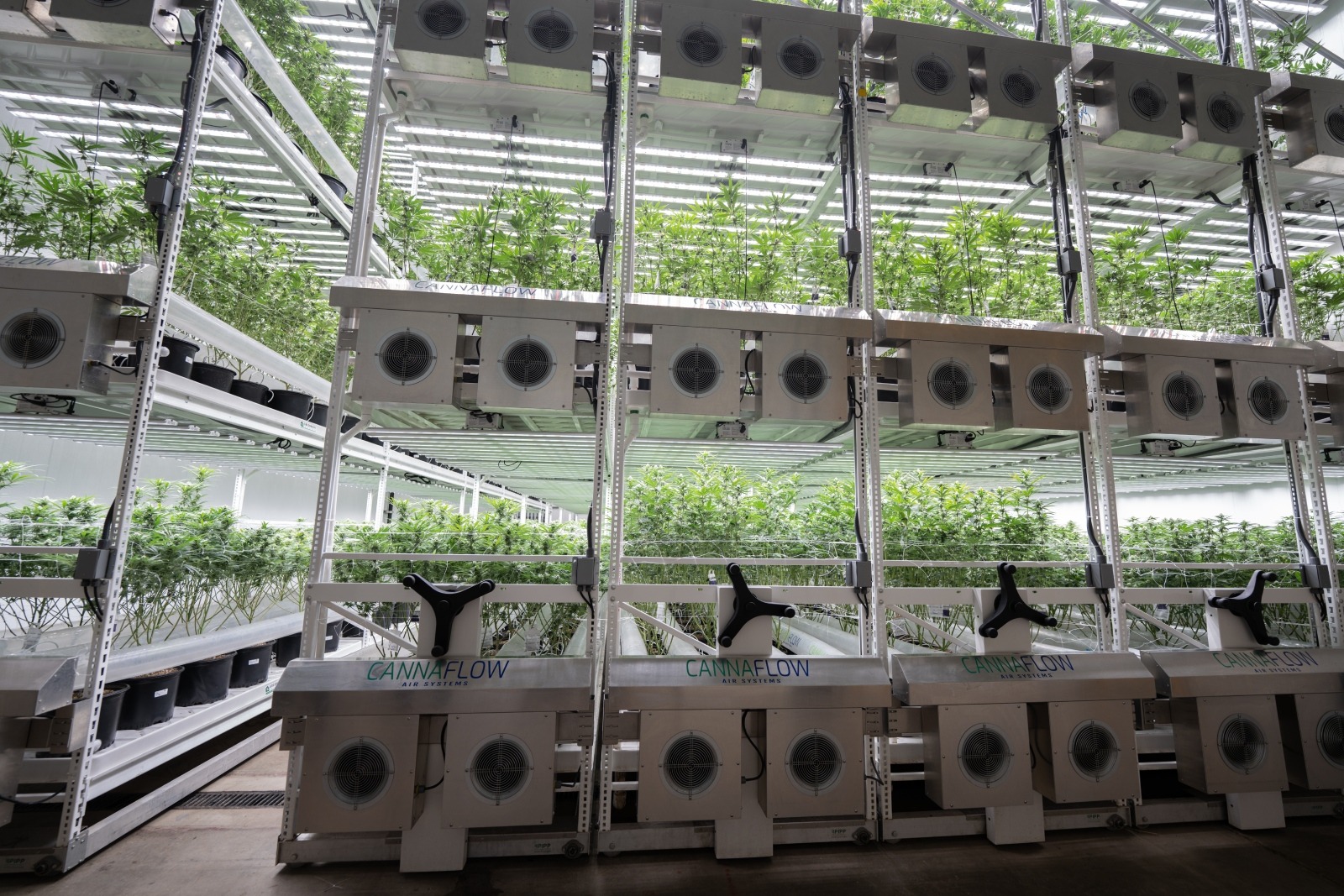
The Rise of Vertical Farming in Modern Agriculture
As the global population climbs toward historic peaks, the demand for sustainable, resilient food production has never been more urgent. Rapid urbanization and shrinking arable land are forcing the agricultural sector to look upward rather than outward.
To solve these compounding challenges, controlled environment agriculture (CEA) is stepping in to transform how we grow high-value crops. Vertical farming has rapidly emerged as a premier solution for secure, year-round cultivation independent of changing regional climates.
However, taking agriculture indoors means assuming complete responsibility for the environment in a time when climate change is a major issue. Within these setups, deploying advanced vertical farming lighting is the single most critical factor in commercial scalability, guaranteeing crop productivity, and maximizing facility efficiency.
In this article, we’ll cover:
- How a vertical farming business works
- How traditional farming is changing with indoor vertical plant growth
- Why proper lighting is key to indoor vertical farming in a greenhouse
- How companies can produce better for to consumers with the best lighting technology
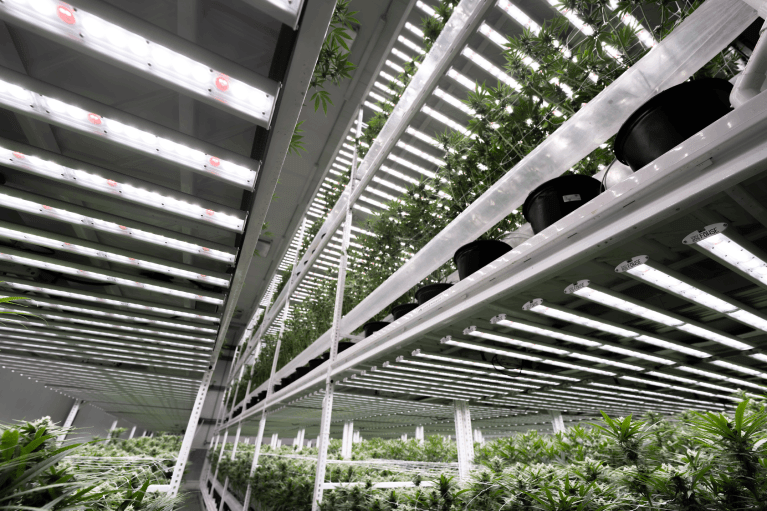
What Is Vertical Farming and How Does It Work?
At its core, vertical farming is the practice of producing food on vertically inclined surfaces or within multi-layer, stacked systems. It’s much different than traditional agriculture, and can be done very well in urban areas.
Stacked Growing Environments
By using stacked layers of cultivation trays on top of one another, a facility multiplies its active square footage exponentially, producing up to 10 times the yield of fresh produce than a traditional farm footprint.
Controlled Climate Management
These operations rely on the integration of high-efficiency hydroponic or aeroponics delivery channels, paired with sealed environmental automation. Because natural sunlight can’t reach lower tiers in a stacked configuration, commercial indoor farming depends entirely on artificial LED lighting to provide the radiation required for plants to complete their lifecycle so you get better quality and higher yields.
The Role of Controlled Environment Agriculture in Food Production
Implementing a comprehensive controlled environment agriculture framework allows growers to have total control over their cultivation space when growing plants. In a standard facility, operators manage an interconnected web of environmental variables, including:
- Ambient Temperature: Maintaining tight day/night thermal bands
- Relative Humidity: Preventing moisture stagnation and pathogen pressure with air conditioning systems
- Carbon Dioxide (CO2) Enrichment: Accelerating photosynthetic carbon fixation
- Targeted Irrigation: Automating precise nutrient and water delivery to the soil through various methods
- Spectral Lighting: Providing customized photon energy recipes suitable for the fruits and vegetables that are grown hydroponically
By removing variables such as unpredictable weather patterns, seasonal freezes, and regional droughts, CEA brings industrial predictability to food production that can contribute to better-quality products at grocery stores in the developing world.
This level of consistency is fueling the commercial adoption of vertical farming for leafy greens such as lettuce, microgreens, culinary herbs, strawberries, and a wide array of specialty medicinal crops.
Why Lighting Is the Most Important Component of Vertical Farming
In an indoor ecosystem, artificial light is the primary energy source that replaces the sun’s natural resources to power plant biology.
Photosynthesis and Light Efficiency
The quality, intensity, and duration of the light footprint directly regulate photosynthesis, vegetative growth rates, and final crop biomass. If your photons are weak or uneven, your yield potential plummets, regardless of how perfect your liquid nutrients or CO2 levels are.
Lighting Challenges in Multi-Layer Farms
Illuminating a multi-layer cultivation setup presents massive engineering obstacles.
Traditional lighting options such as High-Pressure Sodium (HPS) emit intense radiant heat. When packed closely between tight vertical tiers, they scorch the canopy below and overheat the roots above.
To scale safely, modern facilities require ultra-slim, low-heat, high-output indoor farming LED lights designed to mount inches from the crop without damaging the tissue.
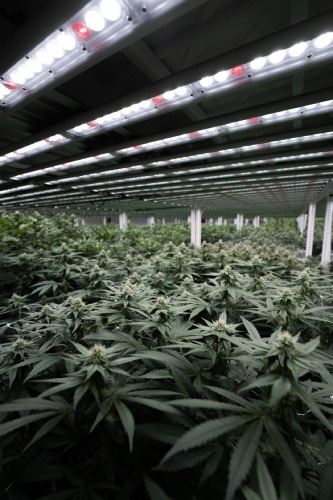
How Advanced LED Systems Are Transforming Vertical Farm Technology
The ongoing evolution of vertical farm technology is defined by the shift from inefficient legacy bulbs to highly specialized, commercial-grade LED systems to manage energy use and lower the reliance on fossil fuels.
Modern indoor farming LED lights bring incredible operational advantages to the table, offering drastically higher photon efficacy, climate control that lowers operating temperatures, and superior light uniformity across the tray.
Beyond basic savings in energy costs, advanced grow light systems feature precision spectrum engineering. Rather than throwing generic yellow or “blurple” light at a crop, high-tech fixtures utilize customized spectral bands to trigger specific plant photoreceptors.
Integrating these fixtures with modernized controllers allows commercial operators to automate light scheduling, run dynamic sunrise/sunset simulations, and scale their production predictably.
Energy Efficiency and Sustainability Benefits of Modern Lighting Systems
For any commercial operator, power consumption represents one of the largest ongoing operational expenses. Deploying inefficient infrastructure can quickly erode wholesale margins.
Reducing Operational Costs
High-efficacy vertical farming lighting significantly reduces direct grid draw per micromole of light produced. Because premium LEDs convert electricity into usable photons rather than wasted radiant heat, the facility’s localized heat load drops substantially.
This reduction alleviates strain on the HVAC infrastructure, lowering both your initial equipment costs and monthly cooling bills.
Supporting Sustainable Agriculture
From an environmental perspective, improving your lighting efficiency can support sustainability initiatives and environmental, social, and governance (ESG) goals. By consuming fewer resources per pound of harvested biomass, clean controlled environment agriculture facilities establish a truly sustainable foundation for local food security.
What Commercial Indoor Farming Operations Should Look for in a Lighting System
Selecting your industrial lighting partner requires analyzing concrete performance metrics so you get long-term commercial viability.
- Photosynthetic Photon Flux Density (PPFD): The light needs to deliver enough actual photon volume to hit target crop saturation points across the entire shelf.
- Fixture Efficacy (μmol/J): Look for high micromole output per watt to keep utility costs low.
- Cross-Over Uniformity: The light level at the edge of your tray should match the light level in the center to prevent uneven crop blocks.
- Ingress Protection (IP Rating): Vertically stacked automated watering systems create high humidity. Fixtures must feature a dust- and water-resistant rating (IP66 or higher).
In commercial indoor farming, evaluating equipment based on long-term return on investment always beats chasing low upfront fixture costs. Industrial options deliver the thermal performance and structural durability required to protect your bottom line for years to come.
The Future of Vertical Farming: Smarter, More Efficient, and More Productive
The future of commercial cultivation centers on total automation and data integration. Tomorrow’s vertical farms will pair vertical farm technology with artificial intelligence, using optical sensors to read real-time plant stress and instantly adjusting climate conditions in response.
These lighting systems will feature dynamic, real-time spectrum steering, shifting light recipes automatically as a batch transitions from vegetative growth into final profiling.
As global supply chains face mounting climate pressures, the reliance on predictable, hyper-local indoor production will intensify. Responsive lighting arrays will remain the core engine driving this next generation of agricultural infrastructure.
Advanced Lighting Systems Are Powering the Future of Agriculture
Succeeding in the vertical farming market requires balancing biology with operational efficiency. Your choice of vertical farming lighting acts as the foundation for your facility’s yield, crop consistency, and monthly power consumption.
By implementing high-performance controlled environment agriculture systems built on advanced LED technology, you secure the predictability needed to scale reliably.
Explore how FOHSE’s purpose-built multi-tier LED systems can optimize your commercial facility by visiting FOHSE.com, or contact us directly today.
Frequently Asked Questions (FAQs)
CEA is an advanced technology-based approach to food production. It protects crops from outdoor elements by hosting them inside a sealed structure where climate, humidity, CO2, nutrients, and lighting are completely controlled.
Due to vertical farms stacking crops indoors in multi-layer tiers, natural sunlight can’t reach them. Artificial lighting serves as the sole energy source driving photosynthesis and structural development.
Yes. Compared to legacy lighting, commercial LEDs consume far less electricity, last significantly longer, emit minimal heat, and deliver tailored spectrums that improve crop quality.
Advanced systems deliver highly uniform, target PPFD levels across the entire growing tray. This guarantees every single plant receives optimal energy for photosynthesis, eliminating slow-growing edges and boosting overall biomass.
Commercial operations need to evaluate photon efficacy, structural thermal management, edge-to-edge light uniformity, waterproof IP ratings, and the overall fixture lifespan.


