


Key Takeaways:
- PAR defines the light spectrum plants use for photosynthesis as 400 to 700 nanometers.
- PPFD measures usable light intensity at the canopy level in µmol/m²/s.
- DLI is the cumulative light plants receive over a full photoperiod, which is critical for yield planning.
- PPE (Photosynthetic Photon Efficacy) measures how efficiently a fixture converts watts into usable light.
- Ideal PPFD ranges from 100–300 for seedlings up to 1000+ during flowering with CO2 supplementation.
- Full-spectrum LED grow lights outperform HPS in efficiency, heat management, and canopy penetration.
- Wattage alone tells you almost nothing useful about a fixture’s actual performance.
Indoor cannabis cultivation is a game of precision, and no variable influences plant performance more than light. The difference between an average harvest and a great one often comes down to how well a grower understands the metrics behind their lighting system.
Research published in PLOS ONE found that higher light intensity increased hemp flower yields, while fixture efficacy had a greater impact on return on investment than spectral distribution alone. In other words, understanding how much usable light a fixture delivers and how efficiently it delivers it can have a significant impact on both production and operating costs.
That’s where PAR, PPFD, DLI, and PPE come in. These measurements help growers evaluate cannabis grow light spectrum, canopy intensity, and fixture efficiency without relying on marketing claims or wattage alone.
In this guide, we’ll cover:
- What PAR is and why it matters for cannabis growth
- How PPFD measures light intensity at the canopy level
- Recommended PPFD ranges for each growth stage
- How DLI impacts overall plant development
- Why PPE is the most important efficiency metric for LED grow lights
- How full-spectrum LEDs compare to traditional grow lights
- Common lighting mistakes that reduce yields and increase costs
- What to look for when choosing the best LED grow lights for cannabis
Why Cannabis Grow Light Terminology Matters
Most growers begin by comparing wattage and price. Neither tells the full story.
A fixture’s wattage only measures how much electricity it consumes. It does not reveal how much usable light reaches the canopy. In many cases, a lower-wattage LED with a high efficacy rating will deliver more photosynthetically active light than a higher-wattage fixture while generating less heat and consuming less power.
Understanding PAR, PPFD, DLI, and PPE gives growers a much more accurate way to evaluate lighting systems. These metrics explain light spectrum, intensity, total daily light exposure, and fixture efficiency. Together, they provide a clearer picture of how a fixture will perform in a grow tent, greenhouse, or commercial cultivation facility.
Poor lighting decisions can reduce yields, create uneven canopy development, and increase operating costs. Learning the terminology behind grow lights helps growers compare fixtures with confidence and make decisions based on performance rather than marketing claims.
What is PAR in Grow Lights?
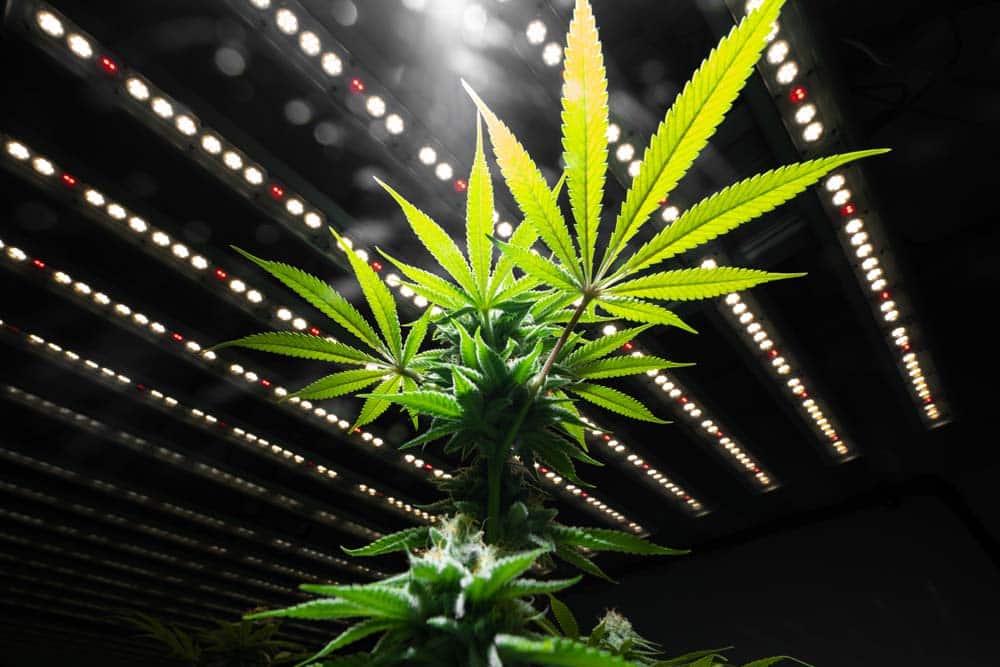
PAR stands for Photosynthetically Active Radiation, which refers to the range of light wavelengths plants use for photosynthesis. PAR covers wavelengths between 400 and 700 nanometers (nm), encompassing the portion of the light spectrum that drives plant growth and development.
While PAR generally overlaps with visible light, plants and humans perceive light very differently. Human eyes are most sensitive to green wavelengths, while cannabis plants rely heavily on blue light (400–500 nm) and red light (600–700 nm) to power photosynthesis and support different stages of growth.
Because PAR measures light from the plant’s perspective, growers use it as a foundational benchmark when evaluating fixtures. Unlike lux or lumens, which are based on human vision, PAR focuses on the wavelengths that contribute directly to photosynthesis and biomass production.
Understanding PAR is the first step toward evaluating fixture performance, but it only tells part of the story. Growers also need to know how much PAR light actually reaches the canopy, which is where PPFD comes into play.
Why PAR Matters for Cannabis Growth
Not all wavelengths within the PAR range influence cannabis plants in the same way. Different portions of the spectrum support different growth responses throughout the plant’s life cycle.
Key wavelengths include:
- Blue light (400–500 nm): Supports compact vegetative growth, healthy leaf development, and strong root formation.
- Red light (600–700 nm): Drives photosynthesis, flower development, and biomass production during the flowering stage.
- Full-spectrum light: Combines multiple wavelengths to support healthy growth from seedling through harvest without requiring separate fixtures for different growth stages.
Modern LED grow lights are designed to deliver a balanced spectrum that supports every phase of cultivation. The goal is not simply to provide more light, but to provide the right wavelengths at the right intensity throughout the plant’s life cycle.
PAR provides the foundation for evaluating grow lights because it identifies which wavelengths plants can use. However, PAR alone does not indicate how much usable light reaches the canopy. To understand light intensity at the plant level, growers need to look at PPFD.
Understanding PPFD in Cannabis Cultivation
PPFD (Photosynthetic Photon Flux Density) measures how much PAR light actually reaches the plant canopy. It is expressed in micromoles per square meter per second (µmol/m²/s) and is the primary metric growers use to evaluate light intensity in a cultivation environment.
While PAR identifies the wavelengths plants can use for photosynthesis, PPFD measures the quantity of those usable photons reaching the plant surface. This makes PPFD one of the most practical metrics for comparing grow lights and optimizing fixture placement.
Many growers make the mistake of comparing fixtures based on wattage alone. Wattage only measures energy consumption. PPFD reveals how much usable light plants actually receive, which has a direct impact on growth, flowering, and yield.
For example, two fixtures may consume similar amounts of electricity but produce very different PPFD levels at the canopy. The fixture delivering more usable photons to the plant is typically the better performer, regardless of its wattage rating.
Why PPFD Matters
PPFD helps growers determine whether plants are receiving enough light for their current growth stage. Insufficient PPFD can slow development and reduce yields, while excessive PPFD may contribute to light stress if environmental conditions are not properly managed.
Because PPFD directly influences photosynthetic activity, it is one of the most important measurements for dialing in fixture height, canopy coverage, and overall lighting strategy.
How to Measure PPFD Correctly
Accurate PPFD measurement requires a PAR meter (a quantum sensor that reads light intensity in the same wavelength range that plants use). To get a useful reading, measure at multiple points across the canopy instead of going with a single, center reading.
A hotspot measurement overstates the average light plants receive. Take readings at the center, corners, and edges of the canopy and average them to understand the uniform light distribution. Adjust light distance accordingly. PPFD drops significantly as fixtures are raised, and uneven canopy lighting creates inconsistent growth throughout the same grow space.
PPFD Chart for Cannabis Growth Stages
Cannabis plants have very different light intensity needs depending on where they are in the growing process. Matching PPFD to the growth stage is a high-level adjustment that growers can take advantage of.
The general framework for PPFD by growth stage provides growers with a solid starting point. But individual strains, environmental conditions, and CO2 levels all influence the sweet spot for any specific grow.
Recommended PPFD Levels by Growth Stage
| Growth Stage | Recommended PPFD |
|---|---|
| Seedlings | 100–300 µmol/m²/s |
| Vegetative Stage | 400–600 µmol/m²/s |
| Flowering Stage | 700–1,000 µmol/m²/s |
| Flowering with CO2 | 1,000–1,500+ µmol/m²/s |
At higher PPFD levels in the flowering stage, CO2 supplementation is essential. Cannabis plants can’t efficiently process high light intensity without enough CO2. Without it, pushing PPFD above 1,000 µmol/m²/s will result in diminishing returns and most likely a degree of light stress.
Without proper CO2 levels maintained around 1,200 to 1,500 ppm, plants can absorb and convert significantly more light energy into biomass and bud production, making high-intensity grow lights the best option for maximum yields, but only in optimized environments.
What is DLI and Why Does It Matter?
Daily Light Integral (DLI) measures the total amount of photosynthetically active radiation a plant receives over the course of an entire day. It is expressed in moles of photons per square meter per day (mol/m²/day).
A simple way to think about it is this:
- PPFD measures light intensity at a specific moment.
- DLI measures the total amount of light received over the entire photoperiod.
Both metrics matter because plants respond to cumulative light exposure, not just instantaneous intensity. A grow room running 600 µmol/m²/s for 18 hours can deliver a similar DLI to a grow room running higher PPFD levels for a shorter period.
The relationship is straightforward:
DLI = PPFD × photoperiod hours × 0.0036
Because DLI accounts for both light intensity and duration, it provides a more complete picture of the lighting environment. Growers can increase DLI by raising PPFD, extending the photoperiod, or adjusting both variables together.
Understanding DLI helps growers fine-tune lighting strategies throughout the cultivation cycle while avoiding the common mistake of focusing on PPFD alone. When PPFD and DLI are optimized together, plants receive the total amount of light needed to support healthy growth and maximize production.
LED Grow Light Efficiency Explained
Photosynthetic Photon Efficacy (PPE) measures how efficiently a grow light converts electricity into usable photons within the PAR range. It is expressed in micromoles per joule (µmol/J) and is one of the most important metrics for evaluating fixture performance.
Put simply, PPE tells growers how much usable light they receive for every watt of electricity consumed. The higher the PPE rating, the more efficiently a fixture delivers photosynthetically active photons to the canopy.
Modern commercial LED fixtures commonly achieve PPE ratings between 2.5 and 3.0+ µmol/J. Traditional HPS systems typically operate closer to 1.7 µmol/J. While both technologies can grow cannabis successfully, higher-efficiency fixtures produce more usable light while generating less heat and consuming less energy.
For growers comparing fixtures, PPE often provides a clearer picture of performance than wattage alone. Two fixtures may consume similar amounts of electricity, but the fixture with the higher PPE rating will deliver more usable photons to the canopy.
Why Efficient LEDs Improve Cannabis Yields
Fixture efficiency affects more than electricity costs. It also influences how much usable light reaches the canopy and how easily growers can manage environmental conditions.
Benefits of high-PPE LED fixtures include:
- More usable photons delivered per watt consumed
- Lower operating costs over the life of the fixture
- Reduced heat output compared to traditional lighting systems
- Improved canopy penetration and light distribution
- Lower HVAC demand in indoor cultivation environments
Because efficient LEDs generate less heat relative to their light output, growers can often position fixtures closer to the canopy without creating excessive heat stress. This improves light penetration throughout the plant and supports more consistent growth across the cultivation area.
Over time, the combination of higher photon output, lower energy consumption, and improved environmental control can have a significant impact on both yield potential and operational profitability.
Cannabis Grow Light Spectrum Explained
A grow light’s spectrum refers to the mix of wavelengths it delivers to the plant canopy. While PAR defines the range of light plants can use for photosynthesis, spectrum describes how that usable light is distributed across different wavelengths.
Cannabis responds differently to various parts of the light spectrum throughout its life cycle. Because of this, modern LED grow lights are designed to deliver a balanced spectrum that supports growth from seedling through harvest.
Many commercial fixtures incorporate:
- Blue light (400–500 nm): Supports vegetative growth and plant structure.
- Red light (600–700 nm): Drives photosynthesis and flower development.
- Far-red light (700–750 nm): Can influence plant morphology and support photosynthetic processes.
- Broad-spectrum white light: Helps create a more balanced light environment across the canopy.
Rather than relying on a single wavelength range, today’s high-performance LED fixtures combine multiple wavelengths to provide consistent plant development throughout the cultivation cycle.
Full-Spectrum vs Traditional Grow Lights
Traditional grow lights often emphasize specific portions of the spectrum. HPS fixtures are heavily weighted toward red and orange wavelengths, while fluorescent fixtures are commonly used for early vegetative growth.
Modern full-spectrum LEDs provide a broader distribution of wavelengths in a single fixture, allowing growers to maintain consistent lighting throughout multiple growth stages. In addition to spectrum flexibility, LEDs generally offer:
- Higher PPE ratings
- Lower energy consumption
- Reduced heat output
- Longer fixture lifespan
- Greater control over light intensity
For many growers, the combination of efficiency, performance, and environmental control has made full-spectrum LEDs the preferred choice for indoor cannabis cultivation.
Common Grow Light Mistakes Growers Make
Even experienced cultivators can make lighting mistakes that reduce yields, increase operating costs, or create inconsistent canopy development. Most of these issues stem from misunderstanding how light is measured and applied within the grow environment.
Comparing Fixtures by Wattage Alone
Wattage measures how much electricity a fixture consumes, not how much usable light it delivers to plants. Two fixtures with similar wattage ratings can produce dramatically different PPFD and PPE values.
When comparing grow lights, focus on metrics such as PPFD, PPE, canopy coverage, and light distribution rather than power consumption alone.
Ignoring Light Distribution Across the Canopy
A fixture may produce impressive PPFD numbers directly beneath its center point while leaving the edges of the canopy underlit. Uneven light distribution often leads to inconsistent plant growth, uneven flowering, and variable harvest quality.
Evaluating PPFD maps and measuring multiple canopy locations helps growers identify coverage issues before they affect production.
Running Fixtures at the Wrong Height
Fixture placement directly influences PPFD levels at the canopy. Hanging fixtures too high reduces light intensity, while placing them too close can increase the risk of light stress and uneven coverage.
Regular PPFD measurements help growers determine the optimal fixture height for each growth stage.
Skipping PPFD Measurements
Many growers spend thousands of dollars on lighting systems but never verify how much light their plants are actually receiving. Without PPFD measurements, fixture placement becomes guesswork.
Using a PAR meter provides objective data that can help optimize light intensity, improve consistency, and maximize yields.
Prioritizing Upfront Cost Over Efficiency
Low-cost fixtures often appear attractive initially but may consume more electricity and deliver fewer usable photons over time. Higher-efficiency fixtures frequently provide a lower total cost of ownership through reduced energy consumption and improved performance.
Evaluating PPE, fixture lifespan, and operating costs often provides a more accurate picture of long-term value than purchase price alone.
How to Choose the Best LED Grow Lights for Cannabis
This process begins with knowing what numbers are most important. PPE rating, PPFD uniformity data, spectrum profile, canopy coverage area, and thermal management are the specs that determine performance. Ignore the flashy marketing language and aesthetics, along with wattage claims.
For home growers, a fixture that covers a 4×4 canopy with uniform PPFD delivery and a PPEE rating above 2.5 µmol/J will cover the vast majority of growers’ needs. For commercial operations, consistency across multiple fixtures, dimming capability, and long lifespan are critical operational factors.
Features to Look for in Modern LED Fixtures
- High PPE ratings: 2.5 µmol/J and above for genuinely energy-efficient output
- Dimming capability: Allows growers to dial in the right PPFD for each growth stage without changing fixture height
- Uniform light distribution: Canopy coverage maps should show consistent PPFD across the full footprint, not a bright center and dim edges
- Thermal management: Quality heat sinks and passive or active cooling extend fixture lifespan and maintain consistent performance over time
- Full-spectrum design: Blue, red, far-red, and white light balance supports healthy growth from veg through late flower
Manufacturers that publish verified PPFD maps, PPE data, and canopy coverage specs are the ones worth trusting with your grow.
FAQs About PAR, PPFD, and LED Grow Lights
PAR stands for Photosynthetically Active Radiation — the 400 to 700 nanometer range of the light spectrum that plants absorb and use for photosynthesis. It defines which wavelengths are biologically useful for plant growth, as opposed to wavelengths that generate heat or are simply invisible to plants.
Most cannabis strains perform best between 700 and 1,000 µmol/m²/s during the flowering stage under standard CO2 levels. With CO2 supplementation at 1,200–1,500 ppm, some cultivars can efficiently use 1,000 to 1,500+ µmol/m²/s without stress.
Use a calibrated quantum PAR meter and take readings at multiple points across the canopy (center, corners, and edges) at the same height as the top of your plants. Average those readings to get an accurate picture of actual light distribution across your grow space.
Fixture efficiency (PPE) determines how much usable light you get per watt of electricity consumed. Higher efficiency means lower operating costs, less heat generated, and better canopy penetration, all of which directly improve yield and reduce overhead across every harvest.
A full-spectrum LED that delivers blue light for vegetative growth, red light for flowering, and far-red light for enhanced photosynthesis covers the complete needs of cannabis plants across all growth stages. Spectrum LED grow lights that integrate UV further support trichome and cannabinoid development in late flower.
Put PAR, PPFD, DLI, and PPE to Work
Understanding PAR, PPFD, DLI, and PPE makes it easier to evaluate grow lights based on measurable performance rather than marketing claims. Together, these metrics help growers understand spectrum, canopy intensity, total daily light exposure, and fixture efficiency.
The real value comes from applying these concepts to a specific cultivation environment. Fixture selection, canopy coverage, mounting height, and light distribution all influence how effectively photons reach the crop and contribute to yield.
If you’re planning a new facility, upgrading an existing grow, or simply looking to optimize performance, FOHSE’s Free Light Plan can help. The FOHSE team will evaluate your facility layout and cultivation goals to create a customized lighting plan designed around coverage, efficiency, and long-term operational performance.
Get a Free Light Plan and see how your facility can optimize PPFD, improve light distribution, and maximize return on investment.


